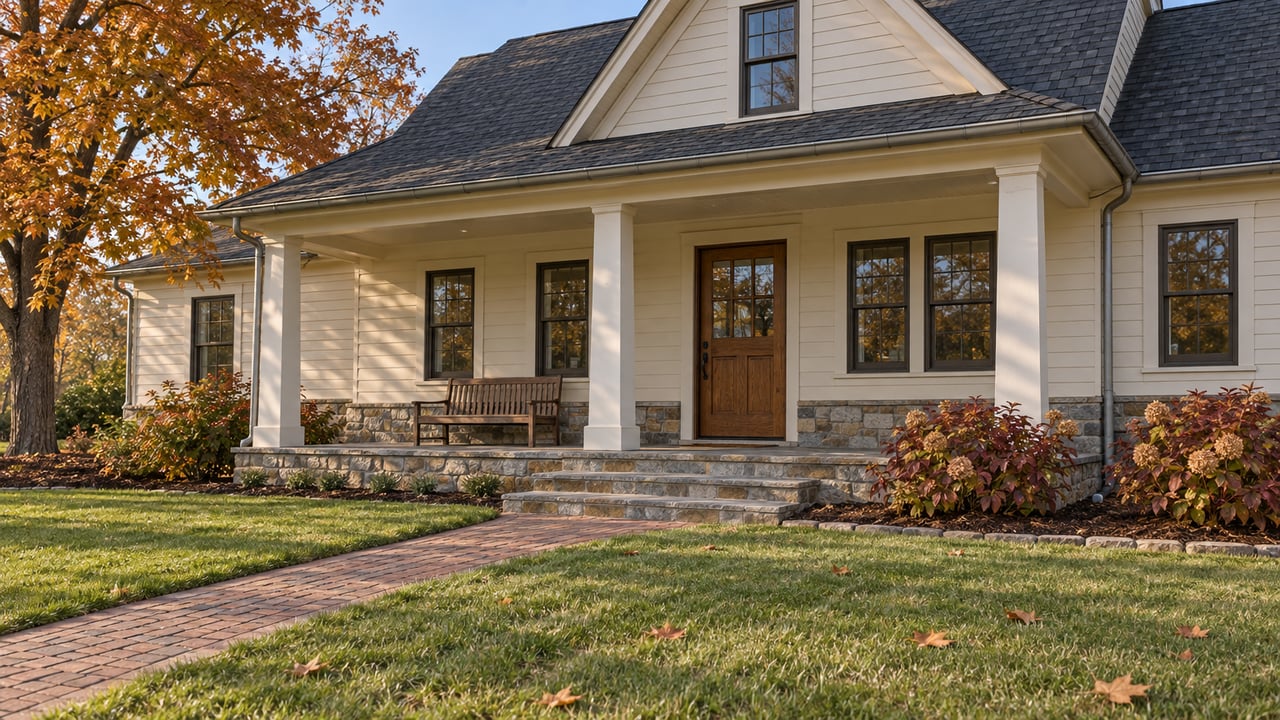
Lot 03401 at Pulte's Hunters Creek community in Flowery Branch is a Newberry plan marked "Available Now." The listing shows a price of $474,815, struck through from $548,397. That's a $73,582 reduction, printed right on the page for anyone to see.
A visible cut like that is rare in south Hall right now. Across Flowery Branch's actively selling communities, more of the builder discount this fall shows up in the mortgage than on the price tag. That changes which number a buyer should compare, and it reaches resale listings too.
The rate gap builders are paying to close
As of October 15, 2026, Freddie Mac's Primary Mortgage Market Survey put the national 30-year fixed average at 7.40%. A year earlier the same survey showed 6.27%. In late August it was 6.65%, according to the Freddie Mac figure cited in a CFA Institute Enterprising Investor essay from that month. Rates rose about three-quarters of a point in under two months, and buyers' monthly budgets shrank with them.
Builders have answered mostly with financing. The National Association of Home Builders' September 2026 Housing Market Index found that 38% of builders cut prices that month. The average cut held at 6% for a sixth straight month, while 66% of builders used sales incentives, the highest share since December. Price cuts haven't gotten any deeper. Incentives keep spreading.
What the Flowery Branch offers looked like in mid-October
Three builders were actively selling in Flowery Branch in October, and their published terms show the pattern clearly.
| Community and builder | Advertised pricing | Incentive terms as published |
|---|---|---|
| Eastlyn Crossing, Ashton Woods | Plans from $422,350 to $474,850; 5464 Hargrove Way reduced to $474,900 from $505,550; 5448 Hargrove Way reduced to $464,900 from $492,500 | Up to $100,000 "Use As You Choose" savings on select Atlanta-area homes; 4.99% FHA fixed (5.81% APR) on select homes through affiliated lender Trailblazer Mortgage |
| Clark Farms, McKinley Homes | From the high $400,000s | Up to $40,000 total: $25,000 in design options on to-be-built homes, or $25,000 toward a buydown, closing costs or appliances on quick move-in homes, or a 4.99% FHA 30-year rate (5.868% APR); plus $15,000 toward closing costs with an approved lender |
| Hunters Creek, Pulte | From $447,990; lot 03401 at $474,815, down from $548,397 | "Days of Deals" on select homes ran through October 23; no specific Hunters Creek rate published |
These are dated examples, and none of them is guaranteed. Ashton Woods' fall terms require a contract written by October 31, 2026, and the $100,000 savings require closing by November 30. The 4.99% rate comes from a pool of funds that lasts only until it runs out. It applies to select homes in participating communities, and the published terms don't say which Eastlyn Crossing lots qualify. McKinley's Clark Farms offer lists no end date, so the terms on any given day are whatever the sales office confirms.
Two of the three published a 4.99% FHA rate, about 2.4 percentage points below the national 30-year average. The national survey compares conventional loans, so it measures a different product.
Why a builder would rather pay your rate than cut the price
A buydown and a price cut can cost the builder about the same. They leave very different marks on the public record.
Thomas Smith, CFA, lays out the mechanism in his Enterprising Investor essay. Builders book incentives as a reduction in revenue. The appraisal, the recorded deed, the loan-to-value calculation and the comparable-sales data all read the gross contract price. He writes that concessions are "rarely itemized in MLS feeds," so the next appraisal in the same community leans on gross prices nobody actually netted. His summary: "Every downstream signal calibrates to a number nobody paid." The essay presents the author's analysis and isn't necessarily CFA Institute's view.
The essay describes a national mechanism and doesn't single out any Flowery Branch community. Still, the arithmetic it lays out applies wherever builders offer buydowns. In any community that sells lot by lot, each closing can become a comp for the next. A $25,000 rate buydown leaves the deed at the full contract price, while a $25,000 price cut records a lower one. Ashton Woods' own fine print acknowledges the overlap: "some price reductions may have already been applied towards Use as You Choose Savings but may be realocated towards qualifying saving options."
The essay also names who carries the risk. It argues that buyers do, because a home bought at a high recorded price with a subsidized rate can be hard to sell later at that price to someone paying the market rate.
The resale market reads the same gross numbers
The Georgia Association of Realtors' September 2026 update for Hall County, current as of October 16, shows a resale market that has slowed while prices barely moved:
- Single-family median sale price in September 2026 was $432,495, down 2.4% from September 2025.
- Days on market until sale rose to 63, up from 51 a year earlier.
- Inventory reached 920 homes, up 8.5%, equal to 5.0 months of supply.
- Sellers received 97.5% of list price.
Under the table, GAR adds that its price figures do "not account for sale concessions and/or downpayment assistance." The county median is a gross figure, just like the builders' recorded prices.
Put the two sides together and the slowdown starts to make sense. A resale seller in Flowery Branch looks at nearby new-home sales and the county median. Both are gross figures, and neither shows the money that changed hands below the line. The buyer across the table is comparing that resale home with a new build carrying a 4.99% rate. Homes are taking longer to sell, inventory is growing, and the median has only dipped. Those numbers line up with the mechanism the essay describes, where asking prices follow gross comps that subsidized financing may have helped support.
For buyers, a resale home at 63 days on market has had nearly two months of that comparison working against it, and sellers in that position often have room to talk. The CFPB's Loan Estimate explainer notes that seller credits count in the cash-to-close calculation, so a credit from a resale seller shows up on the same document as a builder's.
Putting a new build and a resale home on the same sheet
To compare the two fairly, build the comparison from the loan up. List price is the wrong starting point.
- Start with Loan Estimates for the same loan type. The CFPB's comparison guide walks through interest rate, monthly payment, upfront loan costs, lender credits and cash to close. It also notes that several estimates can help in negotiation. Both 4.99% offers in Flowery Branch are FHA rates. Ashton Woods' terms require a minimum 640 credit score for its rate, so compare them with FHA quotes rather than the national conventional average.
- Read the affiliated-lender terms closely. Under the CFPB's Regulation X, builders may refer buyers to settlement-service providers. An affiliated business arrangement carries a written disclosure of the relationship and estimated charges. Ashton Woods states that using Trailblazer Mortgage isn't required to buy one of its homes, but the advertised rate and closing-cost incentives depend on it.
- Price the design credit at what you would actually choose. McKinley's $25,000 in designer options on a to-be-built Clark Farms home is worth $25,000 only if those are upgrades you'd pay for anyway. A finish you'd skip has no value to you. On a resale home, the same money might go further on a project you pick yourself after closing.
- Check the closing deadlines against construction reality. Ashton Woods requires quick move-in homes to close by November 30, 2026, and gives select ready-to-be-built homes until February 15, 2027. McKinley advertises completion within 130 days of contract, but the page's copy still mentions moving in "just in time to... celebrate summer," so ask the sales office for a written date. A rate tied to a closing deadline is only as good as the build schedule behind it.
- Read the resale comps for what they leave out. If the nearby sales a resale seller cites are builder closings, the recorded prices may include incentives that never appear in the listing data.
Quick answers
Will these Flowery Branch offers still be available when I tour? Some won't. Pulte's Days of Deals ran through October 23, and Ashton Woods' contract window closes October 31. McKinley's Clark Farms offer has no published end date. Treat every figure here as a mid-October snapshot.
Is 7.40% the rate I'd get on a resale home? It's a weekly national average for 30-year fixed loans as of October 15, 2026, not a quote. Your rate depends on your credit, down payment and loan type.
Does a lower recorded price on a resale home mean a worse deal than the new build? Not necessarily. The new home's recorded price may include tens of thousands in incentives. Compare monthly payment and cash to close on matching loan types.
This post is general information, not legal, lending or financial advice. Please confirm loan terms, incentive eligibility and contract obligations with your lender and the appropriate professionals before you act.
If you're weighing a Flowery Branch new build against a resale home, I'm glad to sit down with both sets of numbers and the construction details behind them, from the build schedule to what a design credit really buys. Schedule a free consultation with Michele Lester, and bring the Loan Estimates you've collected so we can go through them line by line.